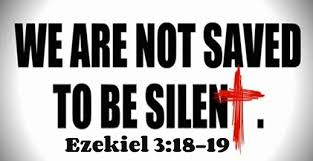
In a world fraught with uncertainty and moral ambiguity, the call to obedience resounds with clear urgency, especially when we examine scriptural directives. A compelling passage that underscores this principle is found in Ezekiel 3:18-19 (KJV), where God speaks to the prophet Ezekiel about the grave responsibility of warning the wicked. This scripture not only emphasizes the importance of obedience but also the consequences that arise from our actions—or inactions.
The passage reads:
“When I say unto the wicked, Thou shalt surely die; and thou givest him not warning, nor speakest to warn the wicked from his wicked way, to save his life; the same wicked man shall die in his iniquity; but his blood will I require at thine hand.” (Ezekiel 3:18)
Here, God makes it abundantly clear that there is a divine expectation for those entrusted with His message. The role of a messenger is not passive; it is one filled with moral responsibility. The phrase “his blood will I require at thine hand” serves as a powerful reminder that neglecting our duty to warn others carries serious repercussions. Our obedience, in this case, becomes a matter of life and death—not just for others but for our own souls as well.
Obedience, then, is not merely about following rules; it is about engaging in a proactive, loving response to God’s call. When we are obedient to God’s voice, we align ourselves with His will, allowing us to become instruments of change in the lives of others. This brings us to the second part of the passage:
“Yet if thou warn the wicked, and he turn not from his wickedness, nor from his wicked way, he shall die in his iniquity; but thou hast delivered thy soul.” (Ezekiel 3:19)
This verse highlights the imperative of action. Even if our warnings go unheeded, the act of obedience protects our own spiritual integrity and ensures that we have done our part. It’s a call to live with courage and conviction, urging us to speak out against wrongdoings, not out of judgment, but from a place of love and concern for the soul’s salvation.
The consequences of disobedience are severe, yet the repercussions of obedience have the potential to ripple through our communities and beyond. The act of warning can lead to repentance and transformation, serving as a testament to the hope and mercy God extends to all humanity.
In today’s context, living out this principle means being unafraid to address issues of injustice, immorality, and wrongdoing while grounded in love. Whether in our personal relationships, within our communities, or on a broader societal scale, our voices matter. Every act of obedience is a chance to help redirect someone toward a path of righteousness.
So, how can we put this into practice in our daily lives? Firstly, cultivate discernment through prayer and study of scripture, allowing God’s Word to guide your decisions. Secondly, seek opportunities to engage with others—be it friends, family, or coworkers—about behaviors or attitudes that may lead them astray. Finally, remember that the outcome is not within your control. Your responsibility lies in the act of obedience and love conveyed in your actions.
The message of Ezekiel 3:18-19 serves as a powerful call to action. We must recognize our roles not only as recipients of God’s grace but also as messengers and stewards of His truth. By embracing the importance of obedience, we not only fulfill our divine calling but also become catalysts for transformation, leading others away from the brink of spiritual death and towards everlasting life. In doing so, we find true freedom and fulfillment in our own souls.
 Stitched Wings Outreach
Leave a comment